

Chasing catastrophe, p.1
Chasing Catastrophe, page 1


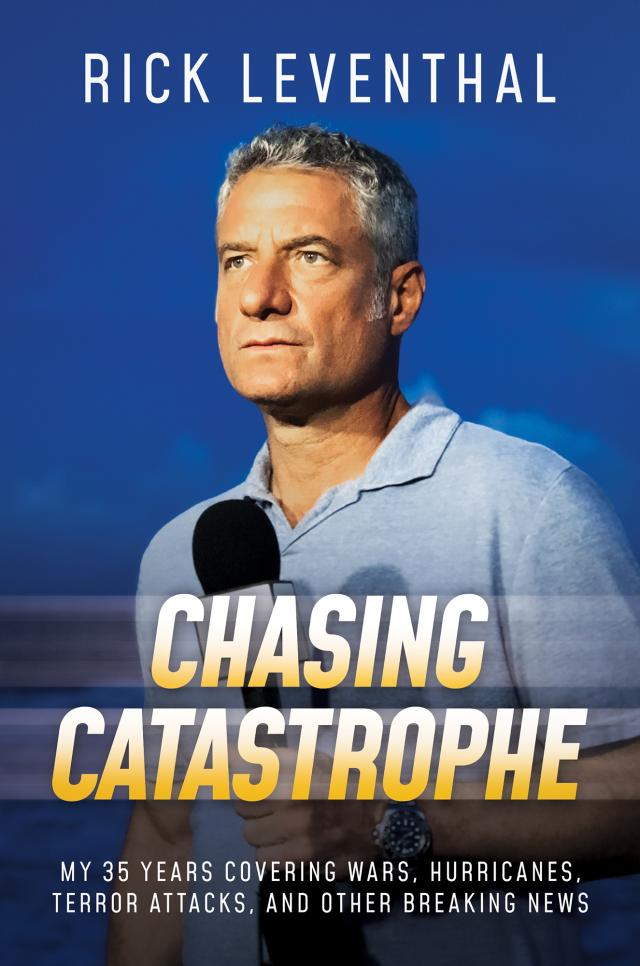
A POST HILL PRESS BOOK
ISBN: 978-1-63758-494-1
ISBN (eBook): 978-1-63758-495-8
Chasing Catastrophe:
My 35 Years Covering Wars, Hurricanes, Terror Attacks, and Other Breaking News
© 2023 by Rick Leventhal
All Rights Reserved
Cover photo by Madelin Fuerste
This is a work of nonfiction. All people, locations, events, and situation are portrayed to the best of the author’s memory.
No part of this book may be reproduced, stored in a retrieval system, or transmitted by any means without the written permission of the author and publisher.
Post Hill Press
New York • Nashville
posthillpress.com
Published in the United States of America
To my wife, Kelly. I couldn’t have written this book without your love, encouragement, and support. You’ve been with me every step of the way, feeding me, inspiring me, listening to my stories, suggesting edits, pushing me to keep at it, handling everything I couldn’t handle while I was filling these pages with my words. You have changed my life for the better in more ways than I can count and I will always cherish every minute we share together.
Table of Contents
Chapter 1 - 9/11
Chapter 2 - First to Afghanistan
Chapter 3 - Hillary’s Collapse at Ground Zero
Chapter 4 - The Early Years
Chapter 5 - Iraq Embed: Volunteering for War
Chapter 6 - Libya
Chapter 7 - The 2000 Election in Tallahassee: Hanging Chads and A-Rod
Chapter 8 - Hurricane Hunter
Chapter 9 - Riots in Baltimore
Chapter 10 - Dannemora Prison Break
Chapter 11 - The Minneapolis Bridge Collapse, NTSB Training, and the Only Time I Burned a Source
Chapter 12 - The Decapitation of Daniel Pearl
Chapter 13 - The Day Dale Earnhardt Died
Chapter 14 (The Best Chapter) - Kelly, Covid, and California
Acknowledgments
CHAPTER 1
9/11
Large pieces of flaky dust were drifting from the sky like some kind of strange summer snowstorm in downtown Manhattan, ashes slowly gliding down from the blazing towers, collecting on Church Street and covering everything on the ground: people, fire trucks, pieces of one of the jet engines lying across from me and our Fox News satellite engineer at the corner of Church and Warren, yellow caution tape already wrapped around the ripped metal and large gear on the pavement.
I saw what appeared to be federal agents taking photos of the plane parts, which were buried in the same layer blanketing everything else…a puffy gray powder that I could best describe as moon dust. The entire downtown area below Canal Street had become a massive crime scene, and we were standing right in the middle of it.
It was eerily quiet, except when it wasn’t. The silence would be broken by the sirens of ambulances, police cars, and fire trucks rolling past. Then it was just the breeze and the plaintive cries of stunned survivors walking out of the smoky cloud like zombies, with chalk-covered faces and unrecognizable expressions, a mix of shock, confusion, and absolute horror.
And then, one minute before 10 a.m. on that beautiful crystal-clear September morning, we all heard the rumble of the first tower starting to fall.
I was with engineer Pat Butler, who’d parked the Fox News Channel satellite truck on Church Street near the corner of Warren, just five blocks north of Ground Zero, roughly 1,200 feet from the heart of the World Trade Center (WTC).
The producer and cameraman hadn’t made it to our location yet, so Pat pulled some cables from the back of the vehicle and plugged in the truck camera and a stick microphone. He’d already dialed in our shot, but we’d lost communication with the studio. Cell phones weren’t working, but as it turned out, our picture was live and we were recording all of it in the truck.
I grabbed the mic and he grabbed the camera, and I started narrating the scene, with no idea if the network was putting us on the air live, and just as I started describing what was happening around me, the first skyscraper started to crumble.
We heard what sounded like a freight train struggling on gravel-covered tracks, or a giant bucket dumping chunks of rock and sand from hundreds of feet in the air, as each floor of the South Tower pancaked onto the next, and the entire 110-story skyscraper became a massive pile of broken rock, twisted steel, tangled staircases, and victims’ bodies. Close to three thousand lost souls were crushed and burned in the impact and explosion of the jet, the fires that followed, or the fall of the building itself, not to mention the jumpers who leapt to their deaths from above the impact zone rather than suffer an unimaginably horrible alternative.
Pat and I couldn’t actually see the first tower fall, because of all the other buildings blocking our line of sight, but after the collapse we saw a huge dust cloud at least two hundred feet high rolling north up Church Street, right toward us.
Everything that happened next is recorded on tape.
I yelled at Pat to zoom in on the chaos behind me and started reporting again:
“There’s been a huge explosion. Everyone is running in the other direction. We’re on Church Street. We’re not sure what happened.”
Someone in the background yells in horror: “IT FELL DOWN!”
“There’s been a huge explosion,” I continued. “Everyone’s running for their lives, literally. Police, media…I see a woman pushing a baby carriage. Here comes the smoke! Here comes the smoke. It’s unclear what happened, if the tower collapsed or what.”
Then I looked at Pat and said, “I think we getter get out of this mess dude. I think we better get out of this.”
We ran to the truck, dropped the gear, and jumped inside to escape the cloud, unsure of what exactly had just happened and completely unnerved about what might come next.
The video goes to black as the camera is enveloped, but you can hear our entire conversation. Pat is coughing uncontrollably, choking on the smoke he inhaled outside. “Oh my God, Pat. Close that door dude! Oh my God, we might fucking die here together, you and me. You all right?”
Pat is still gagging and coughing.
“Where’s Jonathan?” I ask, about the producer who’s supposed to meet us to help with our live shots. Then I look out the small window in the back of the truck. “Holy shit. We can’t see a fucking thing. Look at that.”
“Oh my God. Oh my God,” I continue. “Dude, this is not good. We shouldn’t be here, should we?”
This was the most rattled I’d ever been in my forty-one years on Earth: “Everybody else fucking ran. The cops, everybody. I don’t know what to do.”
You can hear Pat in the background, frantically trying to dial the phone to connect with our Midtown office.
“Fuck,” I say, “are we gonna die in this fucking satellite truck with no cell service?”
“Come on baby. Please!” Pat is talking to the phone. “COME ON!” He keeps trying. “Come on baby, WORK!”
“I think the fucking tower must have collapsed,” I tell him.
“All those poor people, Rick. So many people in the building.”
“Oh, I know” I told him. “This one cop told me he saw bodies on fire leaping out of the building from the one hundredth story or eightieth story.”
The smoke is starting to clear now, and the shot from our camera slowly becomes visible through the haze, pointing at the street from below the truck.
“It’s clear now dude. You wanna go back out there?”
Pat tells me, “I need a towel and water for my face!”
Then he gets his composure. “Wanna go out? What do you think, brother?”
“Yeah, I think we should go out,” I said. “I just wish we could know if they’re seeing our shot!”
We headed back out onto the street, where everything had turned a faded white, covered in ash. We’d been inside the vehicle for just under four minutes.
“I’ll just start talking and you start shooting,” I tell him.
What happened next was by far the most difficult challenge I’d ever faced as a reporter.
On a typical day, you have to turn people away who want to be on TV. Most people can’t wait to share their opinions or mug in the background or try to tell you about some cause or project they’re passionate about, but this was a day like no other.
I didn’t even attempt to stop most of the people walking by because they were clearly in shock, stunned, or devastated by what they’d just experienced, their eyes blank and cold, and most of them barely noticed we were there.
I went back and forth between narrating the scene around me and interviewing anyone willing to talk, including a uniformed NYPD detective walking by, covered in dust, who’d been near the base of the first tower to fall.
“Everything just all of a sudden imploded,” he told me. “I ran as fast as I could. Ran inside a building a block away, then it started filling with smoke. Then I came out and it looks like I’m in a surreal movie.”
I asked if there were cops or civilians on the ground nearby, and how many were there.
“Where that happened, it was mostly police officers. Might’ve been 100, 150.”
I didn’t know what else to ask, or what else to say. This man might’ve just lost t
The network was dipping in and out of our shot, with anchor Jon Scott narrating over live images of the smoking towers and a wider shot of the dust clouds over Lower Manhattan, as well as the developing scene at the Pentagon, hit by another hijacked jet, with flames and smoke rising from the iconic building and staff rushing past the camera toward safety.
When Jon tossed back to me, I was doing another scene-setter, as Pat zoomed in on the pieces of the engine on the ground.
“Pandemonium a short time ago, when the building did collapse or whatever it was that happened, it was a huge explosion, a huge rumbling cloud of smoke and fire, came across Church Street, and then started billowing this way, and all we saw was people, were people running in this direction, everyone. Law enforcement, a woman pushing a baby carriage…”
(I’d walked over to the parts of the airplane in the street, surrounded by crime scene tape.)
“This is actually, we believe, a piece of debris from one of the planes that hit one of the towers of the World Trade Center. The FBI is here, you can see this area is roped off, they were taking photographs and securing this area just prior to that huge explosion that we all heard and felt.”
(Conspiracy theorists may take these references to an “explosion” to support a far-fetched version of events, claiming the towers were blown up by controlled demolitions after they were hit by planes, but I can assure you the word was used only because it was a quick way to describe the intensity of the collapse. There was no actual explosion, except when the planes hit the buildings and their loaded fuel tanks ignited.)
“We are trying to talk to some of these guys…. Can you tell me what you saw, what you heard?”
A bearded man with a Fire and Rescue hat on stopped to share his story.
“What did you see, what did you hear?”
“It felt like another plane coming, everybody took cover, we ran down into the subway…”
“Were there a lot of people on the subway?” I asked. That’s how I’d gotten downtown, exiting at Canal Street and walking the rest of the way when the conductor was told the WTC-bound train could go no further.
“No, not that many because they already had evacuated before.”
“Did you see people, anyone in danger?”
“Back there, yeah, but I was running, nothing you could do because we saw the thing coming right over…”
I started to ask another question and then trailed off because of a big muscle-bound cop lumbering past me, covered in dust. He’d clearly been wearing a protective vest and had taken it off after the collapse because you could see the outline of it on his shirt.
“Look at this guy, look at this guy,” I said. “Unbelievable. Unbelievable.”
I continued to narrate the scene:
“The streets have been shut down, there was very little traffic on the streets except for emergency vehicles going one way or the other, so there was not a lot of vehicle traffic in this area, but there were a lot of pedestrians on every single corner taking photographs and looking at the building which was still smoking and still on fire.”
I turned back to my interviewee.
“Where were you when the explosion occurred, when a plane hit the building?”
“I saw it from my office on the Lower West Side and came here.”
“You came here, what, to check it out?”
“No! To see if we could help but…[he looks around and shrugs.]” Clearly there wasn’t a lot the man could do.
Just then a detective came walking past, gripping the upper arm of a woman covered in soot, clearly in distress.
“This poor woman,” I said. “Wow.” And then I stayed quiet as they hurried past, seeking some kind of medical attention, letting the scene speak for itself.
Just then people are running again, away from the scene, because of the sound of another plane overhead.
It was unreal. The sound of a plane was now a signal of danger in Lower Manhattan.
“It’s our jet! It’s our jet!” Someone yelled.
Apparently, it was a pair of fighter jets scrambled to patrol the airspace in case more hijacked planes tried to target the city.
“What are you guys doing right now?” I asked some motorcycle cops now on foot, still wearing their helmets, headed toward the scene. “What’s your assignment?”
“Help people,” one of them responded, not breaking stride.
I knew it was a dumb question. It was one of those times when I didn’t want to bother anyone and didn’t even know where to begin, beyond the basics of, “What did you see, what did you hear?”
Then a Black man wearing what looked like a doorman’s jacket walked past, white from the soot from his head to his shoes.
“The dust is still thick in the air,” I said as I resumed my narration. “What that guy is covered with is here,” as Pat panned down to show my shoes shuffling through the layer of dust. “It’s all over the street, just thick soot, ash, just came roaring down here in a huge cloud from the World Trade Center.”
At this point I’d walked back to the center of Church, with the camera pointed south at me and the street beyond, still hazy with smoke, with first responders walking to Ground Zero and a few coming toward me, including another uniformed cop covered in dust, coughing and pouring water in his mouth and over his face and head.
“Are you able to talk, can we just talk to you about what happened?”
He answered while he walked:
“I was downstairs when it exploded,” he said, with a frantic intensity in his voice. He’d been inside when the tower started to fall.
“You were right there at the building?”
“Yes. Lot of people trapped!” he half yelled, still walking away.
“Lot of people trapped,” I solemnly repeated. Just then an EMT grabbed the cop by the arm and redirected him toward a triage area.
The network cut away to scenes of more smoke and flames at the Pentagon and a quick update from Washington, then came back to me.
“Our Rick Leventhal is on the ground in Lower Manhattan where these scenes of chaos and utter confusion are just mind numbing…”
“We were standing here,” I began, “when there was some sort of collapse or explosion, and everyone started running in this direction, police officers, pedestrians, EMTs, everybody came running this way. I saw a woman pushing a baby carriage, running for her life, and right behind her was a huge cloud of billowing smoke and ash and debris coming this way…”
One of our engineers, Pat Muskopf, showed up and I started interviewing him, and the network picked it up mid-sentence:
“I looked up and I saw a huge plume of smoke and the tower was crumbling,” Pat told me. “And it just turned into a huge ton of smoke and next thing I know there’s smoke and one tower.”
Another wave of survivors escaping the towers came walking past, as police vehicles with sirens blaring made their way north through the crowd.
Then I stopped a guy who had evacuated from the North Tower (One WTC), climbing down seventy-seven flights of stairs, reaching the sixth floor as the South Tower (Two WTC) collapsed next door.
“I was in the restroom, there was a big shaking, some of the ceilings collapsed, looked like there was a fire in the elevator shaft, and they brought everyone down and started bringing everybody down the stairs,” he said.
“So you came down from the seventy-seventh floor?” I asked, incredulous.
“Seventy-seventh floor, down the stairs, yes.”
“What was happening around you? Were people screaming?
“No, no, people were pretty calm…. When we got down to the sixth floor there was like another shake or another explosion, everyone started panicking, but [overall] everybody was really calm, and the police and firemen were very helpful.”
They were still coming down the stairs when the South Tower collapsed next door.
“Which of the two towers were you in?” I asked.
“One. World Trade Center One.”
“And when you got to the ground, then what?”









