

Long john, p.1
Long John, page 1


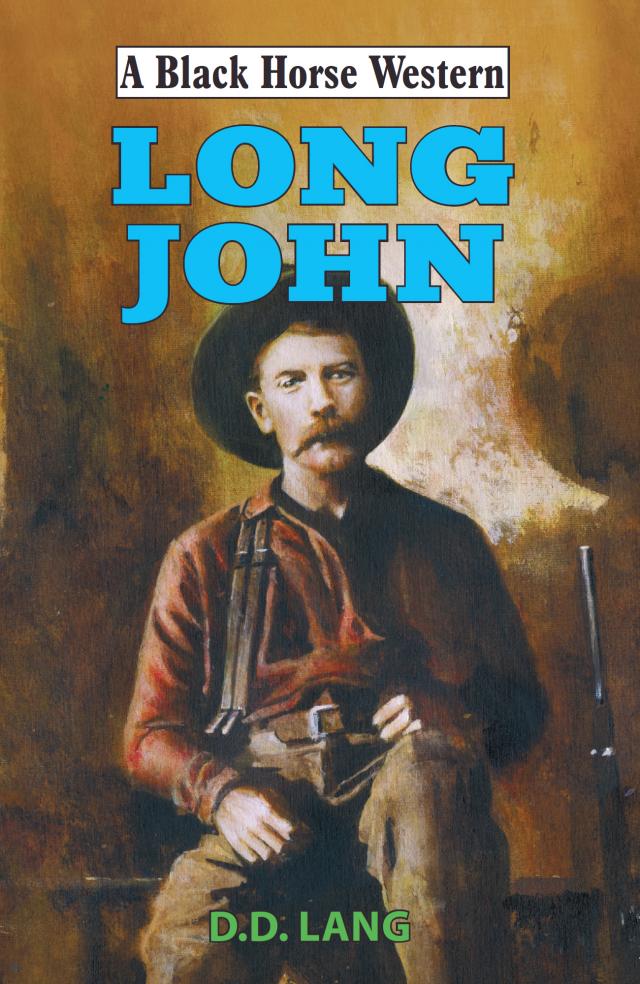
Long John
William Henry John was a small-time rancher. But when his wife died in a riding accident, he became a broken man.
He turned to drink.
At first his neighbours were helpful and sympathetic, but Henry John soon became the town drunk and ignored by all.
Then one day his life changed. He saved the life of a young woman whom he thought was his dead wife. She thanked him and gave him a kiss on the cheek.
From that day forth, William Henry John became a changed, if disturbed man.
By the same author
Woebegone
Last Stop Liberty
Death Storm
Burnout!
Deadly Venom
Blood Money
As Adam Smith
Stolen Fortunes
Money Thicker Than Blood
As Will Black
Avengers from Hell
Tombstone Scarlet
The Legend of Broken Saddle
Death Comes Easy
Blood River
Whiteout!
As Jay D. West
Sharper
Sharper: Avenging Gun
Angel of Death: Sharper
Sharper’s Revenge
Sharper’s Quest
As Del R. Doyle
Showdown in Ghost Creek
Blood at Ghost Creek
Rustlers at Ghost Creek
Ghost Creek Renegades
As Ben Ray
Yellow Streak
Gunslingers
The Plains Killers
A Rolling Stone
Badge of Office
Long John
D.D. Lang
ROBERT HALE
© D.D. Lang 2018
First published in Great Britain 2018
ISBN 978-0-7198-2631-3
The Crowood Press
The Stable Block
Crowood Lane
Ramsbury
Marlborough
Wiltshire SN8 2HR
www.bhwesterns.com
Robert Hale is an imprint of The Crowood Press
The right of D.D. Lang to be identified as author of this work has been asserted by him
in accordance with the Copyright, Designs and Patents Act 1988
All rights reserved. This e-book is copyright material and must not be copied, reproduced, transferred, distributed, leased, licensed or publicly performed or used in any way except as specifically permitted in writing by the publishers, as allowed under the terms and conditions under which it was purchased or as strictly permitted by applicable copyright law. Any unauthorised distribution or use of this text may be a direct infringement of the author’s and publisher’s rights, and those responsible may be liable in law accordingly.
To Leah, my daughter,
whose help was greatly appreciated
PROLOGUE
The Wells Fargo stagecoach pulled into the stage depot, the driver slumped forward, then fell ten feet to the ground.
The shotgun rider was missing. The rear of the coach was peppered with arrows. It was a miracle he’d escaped the Indian war party at all, let alone as a survivor.
A tall, lean man got out of the passenger compartment and looked down at the fallen man. The driver was dead, he knew that. The driver’s sightless, brown eyes stared up at the dark-clad passenger with a look of complete surprise. His mouth was open, and from one corner a trickle of blood meandered down his chin and plop-plopped into the dust. His shirt front was soaked in blood, as was his back.
There were no other passengers. The man clambered aboard the stagecoach for the last time and grabbed the handles of his carpetbag and, without a word or backward glance, strode off into town.
Questions by the stage depot manager were fired at him as he left, but the man didn’t even turn around to acknowledge them, so the manager went for the sheriff.
The tall man made an imposing picture. At least six-foot five inches in his stockinged feet, he walked down the centre of Main Street. Dressed in a black jacket with matching trousers and Stetson, his white shirt was pristine as if he’d just put it on. The bootlace tie round his neck bore a silver bull’s head, his waistcoat, a bright-red satin. The boots, of the best quality and highly polished.
A scar ran down the left side of his face and curved under his nose, hidden by a large, black moustache that was neatly trimmed. His sideburns were long and equally black.
Piercing, dark-brown eyes stared neither to the left, nor the right as he sought his destination.
The hotel, like all small-town hotels, was next door to the saloon. Probably owned by the same man, he thought, as he climbed the wooden steps that led onto the boardwalk.
The town was relatively quiet at this time of the day, four in the afternoon. He checked his watch and put it back in his waistcoat pocket. He painted the very image of a Mississippi gambler, except for his guns.
Strapped to both thighs were a pair of silver and pearl Colts, hung low, gunslinger-style. The handles reflected the late afternoon sun as he stood on the boardwalk and surveyed the town.
Medicine Head was indeed a small town. One street, Main Street, ran from east to west, on either side stood single storey buildings, wooden, except for the bank and the sheriff’s office.
He looked up at the hotel. It was the only two-storeyed building in town. Symmetrical in design, a wide, double-door entrance, and three windows on either side. The first floor had a balcony that ran all the way around; it was empty.
Opposite the hotel was a general store, closed. Next to that the bank and the sheriff’s office.
On this side of the street, the saloon and various private houses lined what was left of the main street.
The livery stable was next to the bank and he crossed the street.
A huge, black man was hammering away with a large hammer in his right hand. In his left, a large pair of tongs held a red-hot horseshoe he was aiming to fix to the bay in the stall.
The tall man looked in the stable and saw several horses, turned, and without saying a word, he re-crossed the street to the hotel. Dan Briggs, the livery owner cum blacksmith, watched as he crossed the street, the huge hammer in mid-air.
The tall man looked around over his shoulder, he eyed Dan and turned back again. The hammer came down on the shoe.
Entering the hotel, he walked to the desk and hit the bell.
Nobody answered.
He hit the bell again. From the office at the rear he could hear movement, papers being shuffled, a chair knocked over. Whoever was in there had obviously been asleep.
The door opened and an old man, well into his sixties, wearing a grimy-grey vest that had once been white, dishevelled hair and two day’s stubble, emerged.
‘Yeah?’
‘Room.’
‘You want one?’
The tall man just stared. His sharp, deep eyes obviated the need for the old man to ask further questions.
‘Sign here,’ the desk clerk pointed at the register.
The tall men picked up the pen and wrote a name. ‘Welcome, Mr— hell, I can’t read your writin’.’
The tall man picked up the key to his room and climbed the stairs.
The room was as he would have expected. A single bed in one corner with a small table to the side with an old oil-lamp. A chest of four drawers, with a jug and washbowl on top against one wall, a large window in another, and a tallboy and a rickety wooden chair completed the furnishings. The ceiling might well have been white once, now it was stained by tobacco smoke and matched the drab colour of the walls.
Throwing his saddle-bags on the bed, he took his Stetson off and hung it on the back of the chair. The jug was full of water so he emptied some into the bowl and splashed his face. Even though the water was tepid, he felt better.
Pouring some water into his hand, he swilled the inside of his mouth, trying to get the dust out and spat into the bowl.
He took a wooden comb from his inside pocket and ran it through his thick, black hair, replaced his Stetson and left the room. The saloon was his next port of call.
The wind had begun to pick up again, dust blew and settled on everything. The yellow clouds swirled and at times had been known to block out the sunlight.
The street was deserted. Opposite the saloon, a flat-back with a four-team stood impatiently pawing at the ground, their cargo of straw bales being attacked by the wind and sand sending wisps into the air.
There were only a dozen people in the saloon. The bat-wing doors squeaked as he pushed them open. As usual, most people in the saloon turned as he entered. When they saw it was a stranger, nobody made eye contact. It was the sort of situation he’d been in many times before. If the piano player had been playing – he would have stopped – adding more atmosphere.
He walked up to the bar and threw down a dime. ‘Whiskey.’
The barkeep brought a bottle up from beneath the counter, the silver pouring spout caught the light as he tilted it into a one-shot glass, filling it to the brim.
The tall man picked the glass up, held it up to the light, to check there was nothing in there he hadn’t paid for, and, bringing it to his lips, knocked it back in one.
Slamming the glass back on the counter, indicating he wanted it filled, he took out a silver cigar case from the inside pocket of his jacket. Opening it, he took out a long, narrow cigar and placed it between thin lips. He closed the case and returned it to the pocket.
The barkeep struck a match. The man, without raising his head, looked the barkeep full in the eye. Then he leant forward and drew on the cigar, blowing out a cloud of blue-grey smoke.
‘Thanks.’
The barkeep nodded and filled the glass. This time, he left the bottle on the counter, then took out a cloth and went through the time-honoured barkeep job of wiping down an already clean bar-top. It was more habit than necessity.
Downing his second glassful, he picked up the bottle, looked at the label – it was a brand he’d never heard of – and poured another glass.
After the fifth drink, he relaxed some. He began to look around the saloon. The room was square and the bar filled up one entire wall. There was a full-length mirror behind it which had seen better days, but it managed to make the saloon look far bigger than it actually was.
With his back to the bar, the bat-wing doors were in front of him, to his left a blank wall. No window, or pictures broke up the monotony of the plain, brown, painted surface.
To his right, a staircase swept from the wooden floor up to a landing which disappeared back over the bar.
The tables, old and rickety, were circular. Covered in stain rings from whiskey and beer, the edges marked where cigars or cigarettes had burned.
At the table nearest the staircase sat four cowboys. They were playing poker quietly. Between the staircase and the bar, another game was in progress, this one was noisier; it was obvious the participants had had a lot to drink.
A hand was won and a flurry of activity took place as the man with his back to the bar began to pull the nickels and dimes and dollar bills that were his prize, towards him.
It looked as if the winner hadn’t won in a long time. Judging by the way he tried to stand, he’d been drinking longer than he’d been playing.
Drunkenly, the man staggered towards the bar intent on buying a round of drinks. His sense of balance was only matched by his clumsiness. Turning towards his card-playing friends, he backed into the tall man.
Not content with knocking the stranger’s drink all down his vest, in an effort to make things better, he only made them worse. As he tried to dry the man off, losing his balance completely, he fell straight into him almost taking him down.
The tall man stood his ground and stared with disgust at the fallen man.
‘Hell, give me a hand here,’ the man said.
The tall stranger merely turned his back on him, willing to let things be.
This was not good enough for the drunkard.
Scrambling to his feet he stood wavering. ‘I asked you fer a hand, stranger, what’s the matter wi’ you?’
‘Let it go, friend,’ the stranger replied.
‘Hell no. I ain’t letting it go,’ the man said, bracing himself on the bar.
In the meantime, his card-playing friends were calling him back, telling him to forget it.
‘Now you damn well apologize, mister,’ the drunk said.
The tall stranger ignored him again.
‘I said—’
‘I heard what you said, boy, now listen to me. Let it be.’
‘You chicken-shit yeller, or what?’
The saloon went deathly quiet. This was an insult that had to be answered.
The tall man placed his empty whiskey glass back on the bar and turned around to face his antagonist.
‘Say what?’ he said.
The man was too drunk to be afraid. ‘I said, mister high-an’-mighty, you chicken-shit yeller!’
‘That’s what I thought you said, mister. Now, you’re drunk, and I’m sober, so why don’t you go back over to your friends and play cards?’
The drunkard laughed. ‘See that boys? The man’s chicken-shit yeller. I bet ya his momma was a whore, too,’ and he continued laughing. He was the only one in the saloon who was.
Reluctantly, the tall man turned for the final time. This last insult, drunk or no, could not be ignored.
Opening his jacket, revealing his twin pistols, he stood feet apart, arms hanging loosely at his sides.
‘This what you want, boy?’ he said.
Letting go of the bar, the drunk man swayed as he tried to imitate the stance. ‘Ready when you are, chicken-shit.’
Those were his last words.
The drunkard drew surprisingly quickly, but not quickly enough.
Even as he cocked the hammer of his Colt and loosed off a shot, the tall man had drawn and fired. There was no mistaking the action of a gunslinger.
The drunkard stood stock-still. Eyes wide open in disbelief, all signs of his four hours drinking disappeared as he looked down at the hole in his chest.
He looked up at the tall man, then slowly fell over backwards, his gun clattering to the wooden floor.
The saloon was deathly quiet. No one dared speak or move in case they became the next victim.
The stranger cast his eyes around the saloon, just in case the man’s friends tried to take him on. He saw the looks in their eyes and knew it was safe enough to re-holster his weapon.
Turning back to his bottle, he filled the glass one more time and sank the burning liquid.
The bat-wing doors flew open and Sheriff Luke McCabe, rifle at the ready, stood in the doorway, staring into the saloon.
‘What’s goin’ on in here?’ he asked no one in particular.
Silence greeted his question.
He stared from face to face, each man avoiding his gaze.
‘I ain’t askin’ agen,’ he said and loaded the rifle.
The barkeep, who’d been hiding behind the bar, raised his head and peered over the counter.
‘Clem was drunk, Sheriff,’ he said. ‘He wouldn’t shut his big mouth. This fella here, had no choice.’
‘That true?’ the sheriff asked the room.
He was greeted by nods and grunts – albeit grudgingly.
Luke McCabe walked up to the stranger. ‘I don’t like trouble in my town,’ he said.
‘Me neither,’ the man answered.
‘You plannin’ on stayin’?’
‘Nope.’
‘Good.’
The sheriff stared at the stranger for a few long seconds and then, without turning his head or taking his eyes off the man, he called out for someone to get the undertaker.
‘You better get Sadie, too,’ he added.
‘If I were you,’ the sheriff went on, ‘I’d drink up an’ hightail it afore his wife gets here.’
‘Sheriff, I ain’t committed no crime. I shot in self-defence.’
‘ ’Tis a piece o’ friendly advice is all,’ the sheriff said and added, ‘I wanna see you afore you go. Need some answers ’bout the stagecoach.’
‘I’ll see you later, Sheriff.’
The tall man continued to drink his whiskey. Nearly half the bottle had disappeared, but it didn’t seem to have the slightest effect on him.
He’d just downed another glass when the bat-wing doors were flung back with such force they hit the walls on either side.
‘Where’s the bastard who killed my Clem?’ a woman screamed at the top of her voice.
Again, the saloon went quiet. All eyes went from Sadie Webster to the tall stranger.
She didn’t need to ask again.
Walking up to within five feet of him she called out, ‘Mister!’
The stranger turned just as both barrels of the shotgun went off.
CHAPTER ONE
The bright sunlight shone straight in the man’s face through the hole in the dusty curtain. Covering his eyes, he groaned.
Another day.
The homestead was getting the better of him. Since the death of his wife in a riding accident, the work-load was more than he could manage with a perpetual hangover.
Neighbours had been sympathetic and helpful – at first – but they had their own spreads to run, their own mouths to feed. As soon as he hit the bottle, they hit the road.
The drinking had become a part of life now, from breakfast onwards, he was never without a bottle.
Once a month he’d go into town for provisions, get blind-drunk in the saloon and spend the night in the buckboard. The townsfolk began to ignore him. There was a limit to their tolerance. In their eyes, mourning was over – life began.
To William Henry John, however, his life was over. From being a hard-working, loving husband, he’d degenerated into the once-a-month town drunk he now was. It seemed that nothing would change that. Until one fateful morning.






